Quiz 2 material for ENSC 100W
Professions
-
Professions have a significant impact on the public
- require professional judgment
- require formal education
- allowed to self-regulate
- has a beneficial effect on the public
-
Engineering has many responsibilities
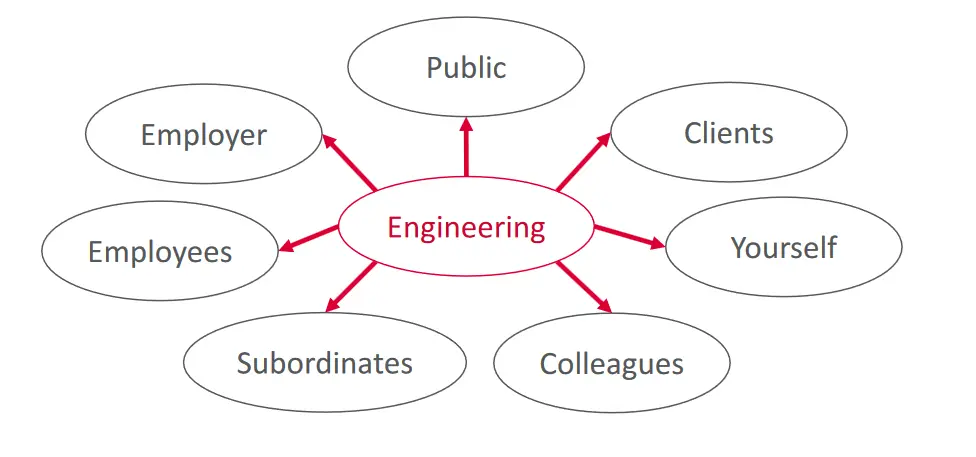 -
--
How to make decisions
-
simple ethical problems
-
Hard ethical problems
-
Provinces and the professions
-
IN canada, professions are regulated under the provincial governments
-
Provincial government
- Engineers granted exclusive rights of practise and title under the Engineers and Geoscientist act
-
EGBC
- required under act to establish, maintain and enforces standards
- Controls the term engineer
- P.Eng registrants can only be called engineer
-
P.Eng
- members must self-regulate profession in the public interest
EGBC Code of Ethics
-
Preamble
- act with fairness, courtesy and good faith
- uphold the values of truth, honesty and trustworthiness
- safeguard human life and welfare and the environment
-
CODE OF ETHICS
-
1. act in the public interest
- hold paramount the safety, health, and welfare of the public, including the protection of the environment
-
2. know your limits
- Undertake and accept responsibility for professional assignments only when qualified by training or experience
-
3. Follow the law
-
4. follow the standards of gov or EGBC
- have regard for standards, policies and plans
-
5. maintain your competence
- maintain your competence in relevant stuff
-
6. state qualifications accurately
- strive to advance the body of knowledge within the practice
-
7. distinguish facts from assupsions/opinions
- provide profession opinions that distinguish between facts
-
8. no conflicts of interest
- conflict of interest and ensure no conflicts including perceived ones.
- properly disclose and take action no bias
-
9. Duty to report
- report to EGBC and other authorities
-
10. stand your ground
-
11. Each professional is responsible
- clearly identify each registrant who has contributed
-
12. work diligently and follow standards of documentation
- undertake work and documentation with diligence and accordance with any guidance developed to standardize professional documentation
-
13. Do unto others
- conduct themselves with fairness, courtesy and good faith
Negligence
-
Under tort law:
- a wrong committed by one person against another; not a crime; not a breach of contract
-
3 essential elements of negligence
-
1. Defendant owed plaintiff a duty of care
-
2. defendant breached duty through action or inaction below the standard of care
-
3. defendants breach caused injury to plaintiff
Intellectual property
-
Copyright
-
Literary works
-
DRamatic works
-
musical works
-
Artistic works
-
Trademark
- distinguishes brand from others
- protects both companies and consumers
- rights acquired through use of tm or the little r
- can’t be a name
- for particular ware or service